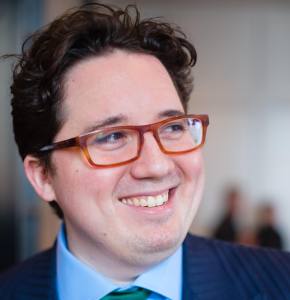
Fabrizio Nevola

Fabrizio is Professor and Chair of Art History and Visual Culture at the University of Exeter. He specialises in the urban and architectural history of Early Modern Italy, and his research looks at the street as a social space, the urban iconography that often binds main streets into a coherent whole and the relations between public and private self-representation. In 2022 he published Street Life in Renaissance Italy (Yale University Press), and in 2007 Siena: Constructing the Renaissance City (Yale University Press). He directs the award-winning HistoryCity apps, which includes Hidden Florence, and the HistoryScapes app in partnership with the National Trust (UK), and he co-edited the open-access Hidden Cities: Urban Space, Geolocated Apps, and Public History (Routledge, 2022).
Read more about Fabrizio on his webpage.
David Rosenthal

David is a historian of early modern Italy and a specialist in public history with mobile media. His research on urban communities, pubic space and social change in Florence between 1500 and 1700 underpinned his work on Florence’s working-class carnival ‘kingdoms’, published as Kings of the Street: Power, Community and Ritual in Renaissance Florence (Brepols, 2015). He co-directs and curates the award-winning HistoryCity apps, which includes Hidden Florence, and the HistoryScapes app in partnership with the National Trust (UK). He co-edited the open-access Hidden Cities: Urban Space, Geolocated Apps, and Public History (Routledge, 2022) and Disaster in the Early Modern World: Examinations, Representations, Interventions (Routledge, 2023).
Read more about David on his webpage.
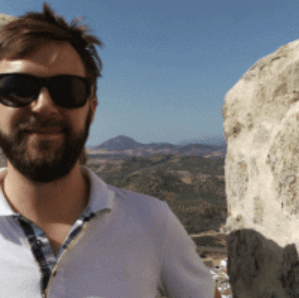
Daniel Jamison
Daniel is a postdoctoral fellow at Hidden Florence and DECIMA, sponsored by a grant from the University of Toronto (SSHRC) and the University of Exeter (AHRC). His doctoral research explored the political culture of late medieval Lucca through the records of the city’s customs house, and his other ongoing research threads also focus on the fascinating political moment of late-fourteenth-century Lucca. His work on Hidden Florence 2.0 draws on this passion for a rich and granular engagement with historical environments. With editing and aid from his collaborators, Daniel drafted the scripts for the Marietta, Ercole, and Niccolosa walks.
Sharon Strocchia
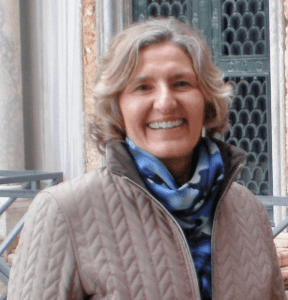
Sharon Strocchia is Professor of History at Emory University. Her research interests lie at the intersection of women, religion, health, and society in Renaissance Italy. She is the author of three books and two edited volumes, as well as numerous articles. Strocchia has written extensively about Renaissance convent life, gender and ritual, women’s mental health, and nuns’ artistic production. In recent years her interests have shifted to issues of health and healing in the early modern period. Her latest book, Forgotten Healers: Women and the Pursuit of Health in Late Renaissance Italy, will be available from Harvard University Press in Fall 2019. Strocchia serves on the editorial board of Renaissance Studies and the advisory board of the Medici Archive Project, among other professional responsibilities.
Read more about Sharon on her webpage
Nicholas Terpstra

Nicholas Terpstra is Professor of History at the University of Toronto. His research deals with Renaissance and early modern Italian history, exploring questions at the intersection of politics, religion, gender, and charity. Publications include Cultures of Charity: Women, Politics, and the Reform of Poor Relief in Renaissance Italy (Harvard: 2013) which won the Marraro Prize of the American Historical Association and the Goodhart Gordan Prize of the Renaissance Society of America, and Religious Refugees in the Early Modern World: An Alternative History of the Reformation (Cambridge: 2015). Terpstra launched the DECIMA project, an on-line digital map of sixteenth century Florence. Employing early modern census data and maps, DECIMA tracks occupation, gender, and wealth patterns. The longer term goal is to produce a 3D map that conveys what it was like to walk around the city, hearing its sounds, moving through its buildings, and seeing its artwork. See: N. Terpstra & C. Rose (ed), Mapping Space, Sense, and Movement in Florence: Historical GIS and the Early Modern City. (Routledge, 2016). Terpstra also co-edited the open access Hidden Cities: Urban Space, Geolocated Apps, and Public History (Routledge, 2022).
Read more about Nicholas on his webpage
Colin Rose
I am an historian of early modern Italy, and my research interests focus on how communities constituted and managed themselves in unstable worlds of poverty, precarious work and potential violence. I teach at Brock University in St. Catharines, Ontario, where I am Assistant Professor of European and Digital History. I am the Co-Principal Investigator for DECIMA, an HGIS project that explores the spatial lives of early modern Florentines (www.decima-map.net). HGIS allows me to better understand the role of physical space, and movement through it, in shaping the daily lives of early modern city dwellers. Whether looking at the residential patterns of particular professions or the prosecution of violent crime, location mattered in early modern Europe, and I am always interested in flexible and dynamic ways to explore the relationships between space, social action and spatial representations of behaviour. I have previously published on the roles HGIS can play in the study of early modern Florentine history, on vendetta and its prosecution in Bologna, and on petitioning in Parma. For Hidden Florence, I provided expert commentary on the “Crime and Punishment” walk (I thought Ercole should be nastier, overall) and wrote / voiced the Read More and Discover More sections for Ercole’s tour.
Read more about Colin on his webpage
Julia Rombough
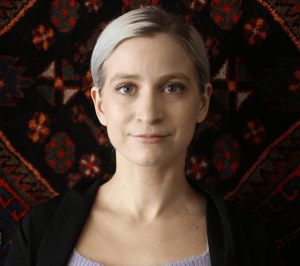
Julia is a historian of the senses, gender, and the body. Her research examines soundscapes in early modern Florence and the links between sense, health, and urban experience. She is currently completing her PhD in History at the University of Toronto. Her dissertation “Noisy Soundscapes: Female Institutions, Sound, and the Medical Body in Early Modern Florence” is supported by Social Sciences and Humanities Council of Canada (SSHRC) and has been awarded a number of national and international prizes. Julia is also a researcher on the Digitally Encoded Census Information Mapping Archive (DECIMA) project, and has published a co-authored article with Dr. Sharon Strocchia on digital mapping, titled “ Women Behind Walls: Tracking Nuns and Socio-Spatial Networks in Sixteenth Century Florence”. Her forthcoming Sixteenth Century Journal article is titled “Noisy Soundscapes and Women’s Institutions in Early Modern Florence”.
 Hidden Florence